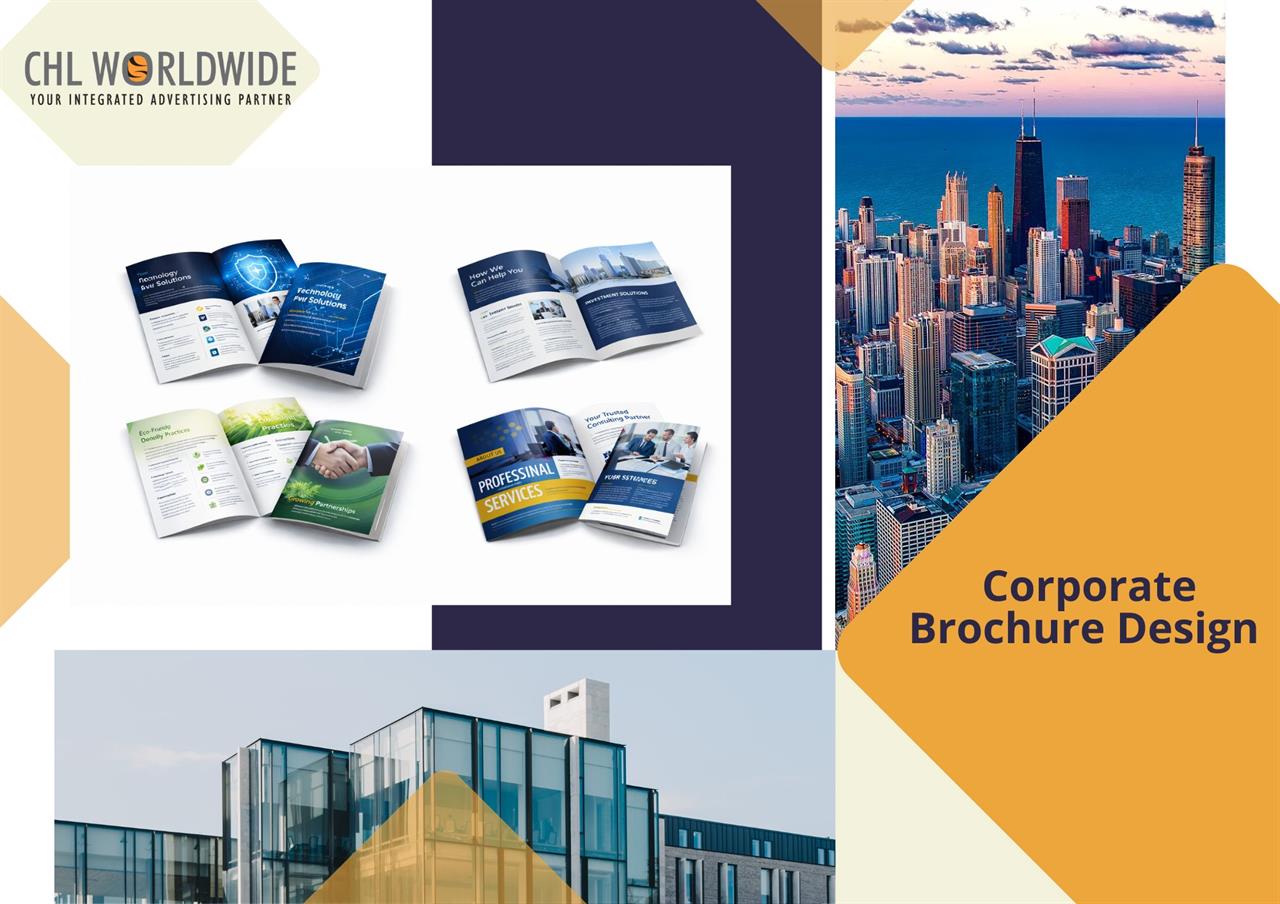
Corporate Brochure Design Examples That Win Clients

22-Dec-2025
Corporate Brochures Still Matter
Although companies have moved to online platforms, corporate brochures still matter. A brochure gives consumers face time with your brand. It is something they can flip through, put on their desks, and later revisit. There is no substitute for the physical or focused engagement of looking at a printed piece compared to an ad or landing page.
Many corporate brochures, however, feel lifeless. Generic layouts, predictable graphic images, and numerous blocks of text make brochures forgettable. A corporate brochure should not merely provide a list of services or products; it should create interest, build trust, and make the reader want to learn more about the company. This is where well-planned Corporate Brochure Design Services make a clear difference.
If a brochure strikes a good balance between these elements, it can accomplish its goal before any sales conversations even begin.
Why a Corporate Brochure is Important
Consumers are now constantly scanning screens; they are looking at email messages, scrolling through social media posts, and ignoring advertisements. A brochure works differently because it actually requests the consumer’s attention in exchange for providing clarity.
Business brochures can be used to communicate a message before, during and after an event. A good brochure demonstrates that you are committed to your brand and want to provide a great service to your clients. For the majority of potential clients, a brochure from a company is typically the only form of marketing material that will be utilized or explored in detail.
This is why many organisations still partner with a Professional Brochure Design Company to ensure their brochure represents them accurately.
How to Develop an Effective Corporate Brochure
Corporate brochures that have been previously published provide insight into the attributes that help make them effective.
Clarity: The brochure reader will have a clear knowledge of who the company is, what the company sells and to whom the company sells (whether the demographic is an individual or business) simply by reading through the brochure and not requiring any effort on behalf of the reader.
Consistency: Throughout the entire brochure, there will be visual continuity with regard to the usage of typefaces, colours and pictures as this helps companies build on an image and provides a cohesive look to the entire brochure.
Flow: The sections within the brochure seamlessly move from one section to the next, taking the reader with it, rather than dumping information on them.
Effective brochures do not attempt to provide too much information. Instead, they highlight only what is necessary to grab the reader's attention. Many of the strongest outcomes come from applying thoughtful Creative Brochure Design Ideas rather than filling every page.
Minimalist Corporate Brochures — Use Cases
Technology, consulting and finance industries typically produce minimalist brochures because they utilize a simple layout with large amounts of white space.
The minimalist design of corporate brochures creates an atmosphere of certainty. The way that the brochure looks sends a message to prospective customers that the company is knowledgeable and has direction in its respective industry.
When creating a corporate pamphlet, it is important to:
Use unique graphics (such as icons or geometric shapes) instead of generic stock images.
Custom icons/aspect illustrations give a modern appearance to the design and do not appear cold or uninviting.
Example 2: Brand Story Led Brochure
Type of Brand: sustainable, ethical or purpose driven
Examples of Use Case: Many brands use a story led approach to engage with their customers and communicate their brand's purpose, values, sourcing and production methods before showcasing their products.
Reasons Why It Works: By sharing their story first, brands create a deeper emotional connection to their customers, making their products feel like they have more value.
Design Considerations: Use a combination of lifestyle images and soft, hand-drawn graphics to convey a warm, personal feel.
Example 3: Professional Services Corporate Portfolio
Type of Brand: Law Firms, Consultants and Other Professional Services.
Examples of Use Case: The format of these brochures is usually straightforward and well structured. The key services are clearly grouped into categories with a strong heading above each category. Visuals used within these brochures support the content and do not take up a large amount of space.
Reasons Why It Works: Clients within these industries prefer clear and reliable, organised brochures.
Design Considerations: Instead of lengthy testimonials, use short examples, with images and/or charts of successful case studies, to convey the same message.
Example 4: Interactive Digital Catalogues
Type of Brand: SaaS and Product Brands
Examples of Use Cases: Interactive digital catalogues can provide users with everything from navigation links to little video snippets to audiovisual assistance to explain complex offerings to new customers.
Reasons Why It Works: Interactive features allow customers to explore the product catalogue without overwhelming them with all of its contents at once.
Design Concept:
Include a clear, simple navigation table of contents, allowing your readers to jump directly to what they wish to read.
Sample 5: Visual Portfolio Brochure Sample
Uses for Sample: Architecture + Interior Design + Creative Studios
Brochures typically feature images as the first thing you see. Text content is kept minimal and layout choices are made carefully.
Why it Works:
For design industries, the products produced create credibility. A brochure becomes an extension of the designer's vision.
Design Concept:
Utilize muted colour washes or texture overlays inspired by the materials utilized in your projects.
Current Brochure Design Trends
The trends associated with current brochure designs show several key changes. Many brands are moving toward using environmentally friendly paper products and printing options. Typography has become bolder yet more refined at the same time. Layouts appear less rigid and more composed, with balanced asymmetry being used more frequently. Visual representations of data are used rather than long-form descriptions. Printed brochures and their digital versions are now usually built from a single design system rather than treated as two separate projects. This approach keeps branding consistent and avoids the “print-first, adapt-later” problem. Many Modern Brochure Design Trends support this shift. They are not visual gimmicks. They exist to make brochures easier to read, simpler to navigate, and more engaging, whether someone is flipping pages or scrolling on a screen.
Behind most effective Corporate Brochure Design Services is a clear understanding of how people actually use brochures. They skim, pause, return later, and often share them internally. Good structure, clear hierarchy, and thoughtful spacing matter just as much as colour or imagery. Creative Brochure Design Ideas work best when they serve clarity rather than compete with the message.
Choosing a Professional Brochure Design Firm
A reliable design partner does more than create attractive layouts. A strong Professional Brochure Design Company takes time to understand your business, your audience, and where the brochure will be used. The designers they hire will ask questions as soon as possible instead of immediately jumping into the design work. They will consider things like whether the brochure will be placed in a meeting room, sent as a PDF by email, or distributed at a business event.
Pricing for Brochure Design
Pricing for Brochure Design will vary depending on different practical elements. The pricing will depend on the type of design, number of pages in the brochure, size of the design, how much customization the brochure has, number of revisions allowed, and whether the designer is creating the content.
When brochures are used for many years or multiple times, their value goes far beyond the cost of creation. They continue to play an active role in the selling process, even after being created, by providing a platform for discussion, establishing credibility for companies, and generating interest in products and services among potential customers.
In the best examples, a well-made brochure goes beyond merely telling potential clients who you are and includes a call to action that will lead clients to the next step (e.g., making an appointment or continuing to explore your products).
The conclusion
The trend of creating brochures for corporate purposes will continue to grow in the future. Brochures will become more formal than they have in the past, as companies understand how to use content, layout, and design with a distinct purpose.
When all three elements are working together with purpose, a brochure becomes much more than a piece of printed material; it's a consistent resource for assisting people in finding out more about your brand and developing a relationship with your brand.
As we have described, when a brochure is done right, it doesn’t shout out its message; it clearly communicates. This clarity can be the very thing that wins clients.
LATEST ITEMS
OUR FAVORITES

30-june-2022
29-june-2022