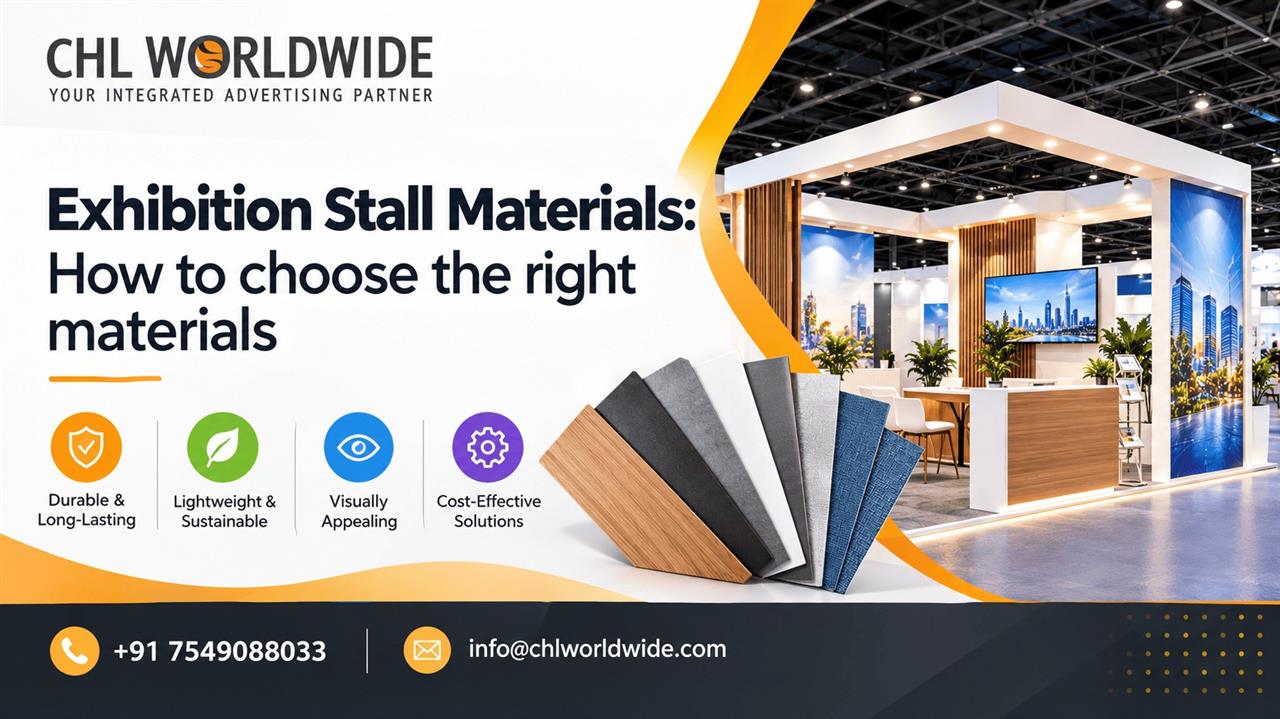
Exhibition Stall Materials: How to choose the right materials

29-Sep-2026
Introduction
Exhibitions reflect he company and brand voice. Some of the most common exhibition stall materials are MDF and plywood for walls and counters, aluminium for frames and modular systems, fabric and vinyl for graphics, and acrylic or glass for display elements. The best choice depends on your budget, your design, how often you will reuse the stall, and the organiser's rules.
When people think about a stall, they picture the design, colours, lighting and branding. But what that design is made of decides how it looks up closely, how long it lasts, how much it costs and how easy it is to transport. Whether you call it a stall or a booth, the same exhibition booth materials are used in both.
Why Exhibition Stall Materials Matter
The exhibition stall design materials you choose shape the look, cost and life of your stall. The right materials affect four things. The first is look and finish: a well-finished surface looks premium, while a poorly finished one looks cheap however good the design is. The second is budget, since materials make up a large part of the build cost. The third is durability and reuse, because some materials survive many shows while others are meant for a single use. The fourth is compliance, as organisers often have rules on fire safety, weight and structure.
Common Exhibition Stall Construction Materials
If you sit down with a fabricator, you'll notice they rarely rely on just one material. Most stalls are built from a mix of exhibition stall fabrication materials and exhibition stall building materials, picked to match the design, the budget and whatever the venue allows. Here are the ones you'll hear about most often.
- MDF for Exhibition Stalls
MDF, short for medium-density fibreboard, is a favourite for a simple reason: its surface is very smooth. That means paint, laminate and vinyl all sit on it neatly, without lumps or grain showing through. It's a good fit for counters, wall panels, shelves and any surface that carries your branding.
- Plywood Exhibition Stall Structures
Plywood is made by gluing thin layers of wood veneer together, which gives it real strength. It holds screws better than MDF, so it's what many builders reach for when a part of the stall has to carry weight or take repeated assembly. A plywood exhibition stall usually costs a little more, and the surface often needs extra finishing to look polished. Still, for frames, platforms and cabinets, or for a stall you plan to use at several shows, it's a dependable option.
- Aluminium Profiles and Modular Systems
Aluminium is light, strong and made to be reused. That's why so many exhibitions stand materials now include aluminium frames: you can put them up, take them down and use them again at the next show. They're easy to transport and quick to set up, which saves time on gthe ground. The only real limit is shape, as very custom or curved designs are harder to achieve. If you exhibit several times a year, aluminium usually pays for itself.
- Exhibition Stall Panels
Panels form the walls of your stall. Laminated panels are durable, easy to clean and available in many finishes. Fabric-covered panels give a softer look and work well with graphics. Composite panels are light and flat, which makes them good for printing. Foam board and PVC sheets are light and budget-friendly for short-term use.
- Fabric, Vinyl and Print Media
Graphics are usually applied to exhibition display materials such as tension fabric, vinyl and backlit film. Fabric prints are vibrant, light and easy to pack. Vinyl stickers look sharp and clean on walls or panels. Backlit fabric or film creates a glowing effect that helps your branding stand out.
- Acrylic and Glass
Acrylic and glass suit product display units, shelves, logos and counters. Acrylic is lighter and safer, while glass gives a more premium feel but needs careful handling.
- Exhibition Stall Flooring
Flooring is often overlooked, yet visitors notice it straight away. Carpet is the most common choice, and it is affordable and comfortable. Raised platform flooring helps hide cables and creates a clearly defined space. Vinyl or laminate flooring gives a premium finish and is easy to clean. Wooden flooring looks warm and upmarket, but it is heavier and costs more.
- Exhibition Stall Ceiling Materials
Ceilings are not allowed at every venue, and the rules vary widely. Where they are allowed, common options include fabric ceilings, which are soft, lightweight and good for branding, and truss with hanging signage, which makes your stall visible from far away. Mesh or lattice designs add a sense of enclosure while staying open. Always confirm height and hanging rules with the organiser before finalising the design.
How to Choose Exhibition Stall Materials
Choosing the right materials deicides the final look of exhibitions. Start with your budget and decide how much of the total goes to the build. Once the budget is sorted, gauge the usability. If you do regular exhibitions, go for durable materials and one-off shows can be done with cheaper materials. Then, ensure the materials matches the design. Consider transport and setup time too, because heavier materials mean higher transport and labour costs. Check the organiser's rules, since fire safety, structural limits and electrical requirements can affect what you can use. Finally, ask about finish and sustainability.
Which Is the Best Material for an Exhibition Stall?
There is no single best answer, because it depends on your goals. MDF with laminate or paint suits a budget-friendly custom build. Plywood suits stalls that need strength and a long life. Aluminium modular systems work best when you need frequent reuse and easy transport. Wood, glass and acrylic give a premium look, and fabric prints and vinyl are the best route to strong branding.
Common Mistakes to Avoid
The usual mistakes are choosing materials only on price, ignoring fire safety and organiser guidelines, using heavy materials when transport is expensive, skipping mock-ups or samples, and forgetting about maintenance and storage after the show.
Final Thoughts
Choosing materials for exhibition stalls is easier when you know what each one does well. Start with your goals, budget and how often you will reuse the stall, then let your designer recommend the right mix. If you are planning your next exhibition and want expert guidance on design, materials and fabrication, CHL Worldwide can help you make practical, well-informed choices.
Frequently Asked Questions
1. What are the most common exhibition stall materials?
MDF, plywood, aluminium profiles, laminated panels, fabric, vinyl, acrylic and glass are the most widely used.
2. Is MDF or plywood better for exhibition stalls?
Depending on the requirements, a combination of both can be used for exhibition stalls.
3. What is the best material for an exhibition stall if I attend many shows?
Aluminium modular systems are usually the best fit. They are light, quick to assemble and reusable.
4. How do I choose materials for exhibition stalls on a small budget?
Use MDF or laminated panels for the structure, fabric or vinyl for graphics, and simple carpet flooring.
LATEST ITEMS
OUR FAVORITES

30-june-2022
29-june-2022