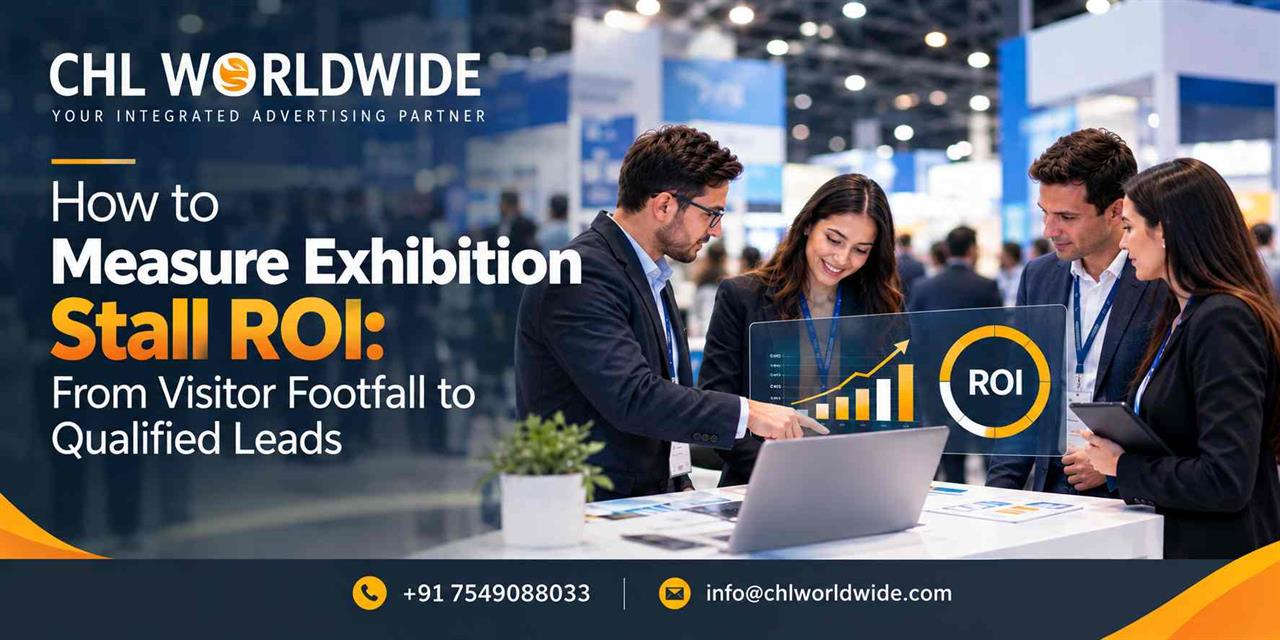
How to Measure Exhibition Stall ROI: From Visitor Footfall to Qualified Leads
22-Oct-2026
Introduction
Exhibition stall ROI shows whether the money you spent on a show returned more value than it cost. You measure it by comparing the revenue or pipeline value linked to the event against your total exhibition spend. A busy stall can look like a success while delivering very few real buyers, so the numbers matter. This guide explains how to measure exhibition ROI step by step, from counting visitors to tracking qualified leads, so your next trade show decision rests on evidence.
Set Clear Goals Before You Measure Exhibition ROI
Every exhibition return on investment calculation depends on what you wanted from the event. Decide your targets before the show. These could be qualified leads, meetings booked, product demos or sales value.
Pick three to five exhibition success metrics and share them with your whole team. Targets give your numbers meaning. Without them, 400 visitors is just a number.
Add Up Every Cost to Calculate Exhibition Stall ROI
How to calculate exhibition stall ROI starts with the cost side. Include everything you spent:
- Space rental and registration fees
- Stall design, fabrication and installation
- Travel, accommodation and staff time
- Graphics, brochures and giveaways
- Electricity, logistics and storage
- Marketing activity before the show
Then use this formula:
Exhibition ROI (%) = (Revenue from the show minus Total cost) divided by Total cost, multiplied by 100
For example, if you spend ₹10 lakh and close business worth ₹25 lakh, your ROI is 150%. These figures are only an illustration.
Trade show ROI often takes months to appear in full because B2B deals close slowly. Track pipeline value alongside closed revenue so you see the complete picture.
Track Visitors to Measure Exhibition Booth Performance
How to track visitors at an exhibition comes down to a few simple methods:
- A staff tally of people who stop at the stall
- Badge scanning at the entrance of the stall
- QR codes linked to a brochure, demo form or offer
- A lead capture app or form filled during each conversation
- A booking sheet for demos and meetings
Separate four numbers: footfall (people passing), visitors (people who stop), conversations and leads. This funnel is how to measure exhibition booth performance, and it shows where people drop off. High footfall with few visitors points to a design or messaging issue. Many visitors with few leads’ points to the conversation or the offer.
Reviewing exhibition stand performance this way also gives your stall designer real feedback for the next show.
Measure Exhibition Lead Quality, Not Just Volume
How to measure exhibition lead quality is a question many teams skip. A thousand business cards mean little if most of them belong to casual browsers.
Score each lead at the stall using four questions: Is there a clear need? Is there a budget? Is this person a decision maker? What is the timeline? Then grade every lead:
- A: Ready to buy within a few months, with budget and authority
- B: Interested and needs nurturing
- C: General enquiry or early research
Write short notes during the conversation. Your sales team will thank you when follow up begins.
Work Out Your Exhibition Cost Per Lead
Exhibition cost per lead equals total exhibition cost divided by the number of leads. Then calculate the cost per qualified lead using only your A and B grades.
For example, ₹10 lakh spent and 250 leads gives ₹4,000 per lead. If 50 of those leads are qualified, the cost per qualified lead is ₹20,000. The second number is the one that guides your budget decisions.
Compare these figures across shows. This is how exhibition booth ROI becomes a practical tool for choosing which events deserve your investment.
Metrics to Track After an Exhibition
The show ends, but measurement continues. These are the key metrics to track after an exhibition:
- Follow up response rate, including how many leads you contacted within 48 hours
- Meetings booked
- Proposals sent
- Opportunities created in your CRM
- Deals won and revenue linked to the event
- Average sales cycle length for show leads
Tag every lead in your CRM with the event name. This one habit connects each sale back to the exhibition that produced it.
How to Calculate Exhibition Lead Conversion Rate
Calculating exhibition lead conversion rate is simple. Divide the number of leads that became customers by the total number of leads, then multiply by 100.
If 20 of your 250 leads became customers, your conversion rate is 8%. Measure it at each stage as well: lead to meeting, meeting to opportunity, and opportunity to deal. Review the numbers at 30, 60 and 90 days. Each stage shows where your follow up works and where it needs attention.
Exhibition Marketing ROI Goes Beyond Immediate Sales
Exhibition marketing ROI includes value that a sales figure miss. Shows build brand awareness, create partnership opportunities, strengthen relationships with existing customers and reveal what competitors are doing.
Record these benefits separately, for example by counting partnership meetings or customer visits. Keep them out of your core ROI formula so the main number stays honest and use them as supporting evidence when you report results.
Conclusion
Exhibition stall ROI becomes clear when you measure the full journey. Set goals first, count every cost, track visitors, grade lead quality and follow the leads until they convert. Each number tells you something about your stall, your team and your event choice. CHL Worldwide designs and builds exhibition stalls that attract the right visitors and make lead capture easy.
Frequently Asked Questions
What is a good exhibition stall ROI?
A good ROI beats your own target and compares well with your other marketing channels. Industry, deal size and sales cycle all affect it, so build your benchmark from your past shows.
How soon can you measure trade show ROI?
Lead quality shows within days. Full ROI depends on your sales cycle and often takes several months for B2B products.
How do you track visitors at an exhibition?
Use a staff tally, badge scanning, QR codes and a lead capture form. Record every conversation the same way.
What is a good exhibition cost per lead?
The best comparison is your own previous shows and the cost of leads from your other channels. Always look at cost per qualified lead too.
How do you measure exhibition booth performance?
Follow the funnel from footfall to visitors, conversations, leads and qualified leads. The drop off between each stage shows what to improve.
LATEST ITEMS
OUR FAVORITES
30-june-2022
29-june-2022