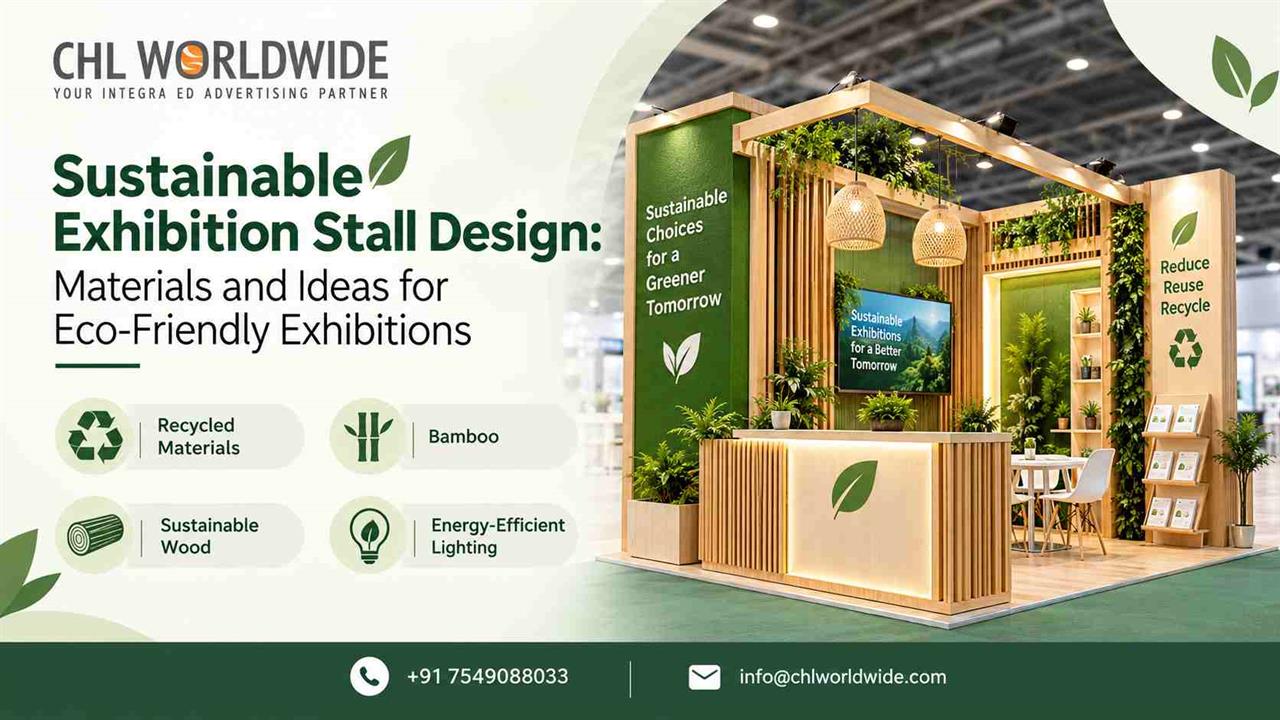
Sustainable Exhibition Stall Design: Materials and Ideas for Eco Friendly Exhibitions

30-Oct-2026
Introduction
Many exhibition stands are built for a few days and thrown away once the show ends. Sustainable exhibition stall design starts with a better question: how can this stall use fewer resources, last longer and find a second life afterward? The answer lies in the materials you pick, the way the structure is built and the habits your team follows on the show floor.
This guide explains what sustainable exhibition stall design means. It covers ecofriendly materials, reusable and modular approaches, and practical ideas you can use at your next show.
What Is Sustainable Exhibition Stall Design?
Sustainable exhibition stall design is the practice of planning, building and running a stall so that it has a lower impact on the environment. It looks at the full life of the stall: where materials come from, how the stall travels, how often it is used and what happens to it at the end.
You may also hear it called green exhibition stand design or sustainable exhibition design. Whatever the name, the idea is the same: use less, reuse more and send less to waste.
Why Does Sustainable Exhibition Design Matter?
Exhibitions bring together materials, transport, energy and printing in a short window, so waste can pile up quickly. A thoughtful approach reduces that waste and can save money over time, because a stall you can use again costs less than one you rebuild every year.
It also shows visitors, partners and organisers that your brand cares about its impact. Many companies now include environmental goals in their wider business plans, and an exhibition stall is a natural place to show them.
Eco Friendly Exhibition Stand Materials
Materials make the biggest difference to the footprint of a stand. These options are widely used for eco-friendly exhibition stand materials.
Responsibly Sourced Wood and Board
Choose timber and board certified by a recognised forestry scheme such as FSC, which checks that wood comes from responsibly managed forests. Boards made from recycled wood fibre are another good choice for walls, counters and shelves.
Recyclable Metals
Aluminium frames are strong, light and easy to recycle, and recycled aluminium needs far less energy to produce than new aluminium. They also suit repeated use, which makes them a favourite among recyclable exhibition stand materials.
Fabric Graphics
Printed fabric stretched over a frame can replace rigid printed panels. It can be taken down, washed, folded and used again at other shows, and it is often lighter to ship.
Cardboard and Paper Based Structures
Recyclable cardboard and honeycomb paper board work well for short term stalls, counters and displays. They are light, easy to transport and simple to recycle after the show.
Low Impact Finishes
Water based paints and low emission adhesives keep the air cleaner for your team and visitors.
Reusable and Modular Exhibition Stall Design
The most sustainable stall is often the one you already own. Reusable exhibition booth design focuses on building a stall that can return to the show floor repeatedly.
Modular exhibition stall design makes that possible by using standard panels, frames and connectors that can be rearranged into different sizes and layouts. A compact 3 by 3 metre stalls at one show can grow into a larger layout at another, using the same core kit. Choose neutral structures with swappable graphic panels, so the frame stays the same while the message changes. Plan for storage and repair as well, since a well-kept modular system can serve many shows.
Sustainable Trade Show Booth Ideas
These sustainable trade show booth ideas work for stalls of almost any size.
- Use LED lighting. LEDs use far less power than older lighting. The US Department of Energy says residential LEDs use at least 75 percent less energy than incandescent bulbs and last much longer.
- Replace print with screens and QR codes. Digital brochures cut paper use and can be updated without reprinting.
- Rent or share furniture and plants. Hired items avoid buying products for a single show.
- Reuse flooring or skip the carpet. Carpet is often discarded after a show, so ask about reusable or recyclable flooring.
- Source locally. Materials and builders close to the venue mean shorter transport distances.
- Choose useful giveaways, or none. Items people keep and use beat throwaway freebies.
How to Plan a Sustainable Exhibition Booth
Start early, because the biggest choices happen at the design stage. Set a simple goal, such as reusing the main structure at two or more shows. Share it with your stall designer and ask for a material list that shows what is recyclable or reusable.
Treat transport as part of the design, since lighter, flatter kits need less fuel to move. After the show, check what was reused, recycled or discarded, and use those notes to improve the next stall. Small, steady steps work better than a onetime effort.
How to Spot Greenwashing
Eco friendly claims should rest on facts. Ask suppliers where materials come from, whether they hold certifications such as FSC for wood and what happens to the stall after the show. Be careful with vague labels like “green” or “natural”. Environmentally friendly exhibition displays earn trust when you can explain in plain words what makes them better.
Conclusion
Sustainable exhibition stall design comes down to choosing better materials, build for reuse and plan for the end of the show. These steps reduce waste, can save money over time and show visitors what your brand values. Start with one or two changes at your next show and build from there.
CHL Worldwide can help you plan an ecofriendly exhibition stall that suits your brand and your budget. Get in touch with CHL Worldwide to talk about your next exhibition.
FAQs
1. What is sustainable exhibition stall design?
It is the practice of planning, building and running a stall to reduce environmental impact through responsible materials, reuse, recycling and efficient transport.
2. Are ecofriendly exhibition stands more expensive?
Costs vary with materials and design. Reusable and modular systems often save money across several shows, because you rebuild less each time.
3. What materials suit a sustainable exhibition booth?
Responsibly sourced wood, recycled and recyclable metals such as aluminium, fabric graphics, recyclable cardboard and low emission finishes are all good choices.
4. Can a small stall be sustainable?
Yes. Simple steps such as LED lighting, digital brochures, reusable graphics and rented furniture all help.
5. What is a modular exhibition stall?
It is a stall built from standard panels and frames that can be rearranged and reused for different show sizes and layouts.
LATEST ITEMS
OUR FAVORITES

30-june-2022
29-june-2022